

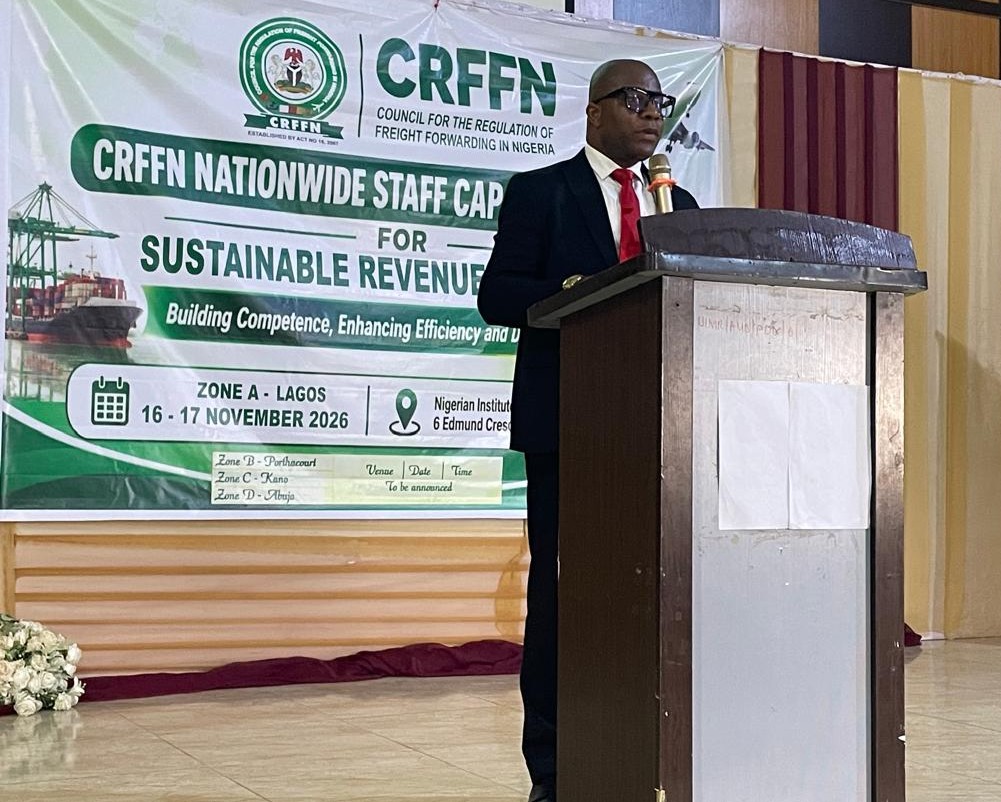
The Council for the Regulation of Freight Forwarding in Nigeria (CRFFN) has commenced a nationwide capacity-building programme aimed at transforming its workforce, improving productivity and strengthening revenue generation.

The Registrar/Chief Executive Officer of CRFFN, Dr Kingsley Igwe, said the Council is more interested in developing a competent and productive workforce than simply increasing its manpower, stressing that efficiency and performance are critical to the agency’s ability to deliver on its mandate.
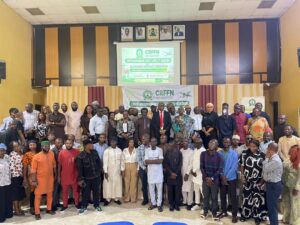
Igwe stated this on Monday at the opening of the CRFFN Nationwide Staff Capacity Building Programme for Sustainable Revenue Generation, held at the Nigerian Institute of Medical Research (NIMR), Yaba, Lagos.
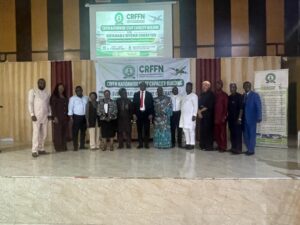
The programme, which has as its theme, “CRFFN Nationwide Staff Capacity Building Programme for Sustainable Revenue Generation: Building Competence, Enhancing Efficiency and Driving Performance,” is designed to equip staff with the knowledge, skills and practical competencies required to improve their performance and contribute to the Council’s revenue objectives.
Igwe said the training is part of a series of capacity-building initiatives undertaken by the Council over the past 24 months, noting that human capital development remains one of the most strategic investments for any progressive institution.
According to him, CRFFN’s ability to fulfil its statutory mandate, strengthen its regulatory functions and achieve sustainable revenue growth depends significantly on the commitment, creativity, competence and productivity of its workforce.

He said the changing dynamics of the maritime and freight forwarding industry, coupled with growing demands for accountability, operational efficiency and financial sustainability, requires the Council to rethink how it delivers its responsibilities and generated revenue.
“As a regulatory institution, CRFFN must continuously strengthen its capacity to mobilise revenue from legitimate sources within its statutory mandate. We must move beyond conventional approaches and embrace innovative, efficient and technology-driven strategies for revenue generation and optimisation,” he said.
The CRFFN chief executive stressed that revenue generation is not the responsibility of only the Enforcement, Regulation and Education, or Finance and Accounts departments, but a collective responsibility across the Council.
He said every department, directorate, unit and member of staff has a role to play in identifying revenue opportunities, protecting the Council’s revenue streams, ensuring regulatory compliance and improving service delivery.
The training will cover revenue generation strategies, optimisation of internally generated revenue, public service administration and performance management, regulatory compliance, monitoring and enforcement, digitalisation, financial management, accountability and transparency, as well as stakeholder engagement and strategic partnerships.
Igwe said the training has been deliberately designed to produce practical results, rather than remain a theoretical exercise.
“My expectation, as the Registrar/Chief Executive Officer of the Council, is that this training will move us from knowledge acquisition to practical application, and from routine administration to measurable results,” he said.
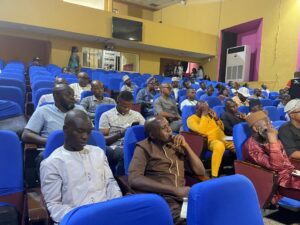
He urged participants to take the programme seriously, participate actively, ask questions, share experiences and identify solutions that could be implemented in their respective departments and offices.
Igwe further challenged the staff to return to their duty posts with improved professional competence and a clear understanding of how their individual responsibilities contributed to CRFFN’s overall revenue objectives.
He said management would focus on translating knowledge acquired during the training into departmental action plans, measurable performance indicators and improved service delivery.
Explaining the broader objective of the programme, Igwe said CRFFN is seeking to build a workforce capable of competing with professionals anywhere in the world and within Nigeria’s public service system.
He drew a distinction between manpower and workforce, saying the Council’s priority is not simply to increase the number of employees but to make its existing workforce more productive.
“To be a workforce is different from being manpower. CRFFN currently has manpower, but do we have a workforce? It is not about the number, but about productivity,” he said.
Igwe explained that a smaller number of highly competent and productive employees could achieve more than a much larger workforce with low productivity.
“The workforce of just 10 men can supersede the productivity of 500 men. That is what it means in terms of competency, in terms of efficiency, in terms of performance,” he said.
He said the capacity-building programme is therefore designed to transform CRFFN’s existing workforce into a competent workforce, rather than relying solely on the recruitment of more personnel.
“We cannot get it outside. It is not by employing many more new hands, but rather transforming the current hands into what we need to deliver what we need to deliver,” Igwe said.
He urged participants to put the knowledge gained during the programme into practice, saying the ultimate measure of the training would be its impact on staff performance, operational efficiency and revenue generation.
The Lagos programme for staff from the zone will be followed by similar programmes in Port Harcourt, Kano and Abuja as CRFFN extends the capacity-building initiative to its workforce nationwide.
Igwe commended the management team, planning committee, consultants and resource persons for organising the programme, while urging participants to make full use of the opportunity to acquire new knowledge and improve their professional capacity.
He said the ultimate goal was to build “a more competent workforce, a more efficient Council and a financially stronger CRFFN.”
He subsequently declared the CRFFN Nationwide Staff Capacity Building Programme for Sustainable Revenue Generation open.





One Comment