


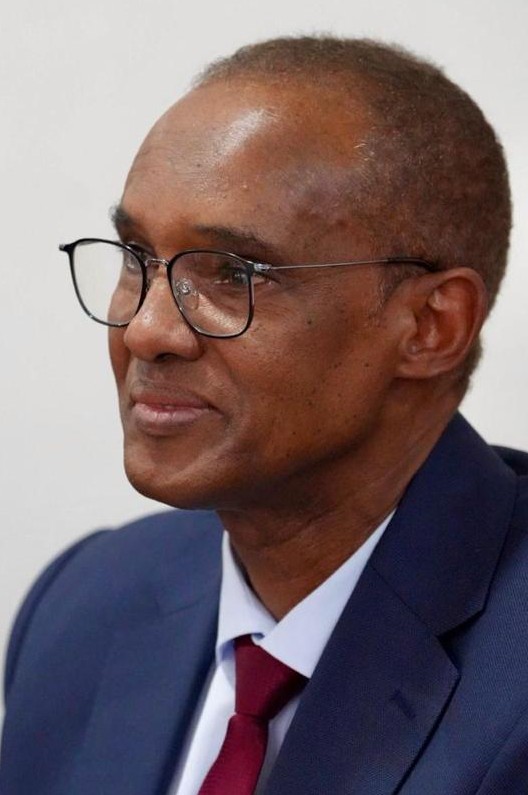
By Ali Daud Mohamed
As global leaders, think tanks and industry titans convene in Nairobi this May for the Africa Forward Summit (AFS) 2026, the conversation around climate action is undergoing a fundamental shift.
We are moving past the era where Africa is viewed solely through the lens of need and vulnerability. Truth is, Africa is not just central to the climate solution, but can be the primary engine for the world’s next industrial revolution. For decades, Africa’s role in the global economy was defined by the extraction and exportation of raw materials to power the growth of other nations. As the world pivots toward a net-zero future, this legacy must end.
Africa is uniquely positioned to build competitive, low-carbon industrial ecosystems. We are no longer a frontier for experimental “aid” or a passive recipient of climate adaptation funds.
Instead, we are emerging as a sovereign industrial power, ready to co-create solutions that are both sustainable and economically transformative.
Africa possesses the world’s highest solar irradiation levels, immense wind corridors, and vast untapped geothermal capacity. For example, with 90% of our national grid currently powered by renewable energy, in Kenya, we have already moved from theory to practice. The Kenya Energy Transition and Investment Plan (ETIP) provides a clear roadmap to Net Zero by 2050. This transition is projected to create over 500,000 green jobs, proving that de-carbonization is a potent vehicle for mass employment.
As a continent of digitally native creators and strategic thinkers, we are no longer asking for a seat at the table, we are building the table itself.
Bridging the gap between potential, and prosperity requires a fundamental reform of the international financial architecture. This is where the renewed partnership terms between Africa and France becomes a critical case study for the global community.
Historically, the narrative has been one of patronage. With the AFS 2026, Africa now seeks to reset the clock. Guided by the principles of Ubuntu and Ujamaa, we are asserting a philosophy of reciprocity. AFS 2026 marks the beginning of a more ambitious phase. This involves aligning French capital and high-end technology with African resources and vision to create value-added products on African soil.
The AFS will be exploring these exact conversations in among others, geothermal, wind, & solar renewable grids, as well as reduction of raw minerals for local value addition among other opportunities in market integration through the Africa Continental Free Trade Area (AfCFTA).
Indeed it is fair to say, while the world is looking for scalable, bankable solutions to climate change. Africa is ready to provide them. What is required now is not more rhetoric, but the political will and financial innovation to bring these projects to life.

The Africa Forward Summit 2026 must therefore be remembered as the turning point where the global community stopped talking about Africa’s potential and started investing in Africa’s performance. France and Africa stand at a historic threshold, let us choose the path of shared prosperity.
The author is the Special Climate Envoy for Kenya; working in the Executive Office of the President of Kenya at State House
About the Africa Forward Summit (AFS) 2026
The Africa Forward Summit is a joint Africa–France initiative, co-convened by the Republic of Kenya and the Republic of France, with African Union endorsement. It takes place in Nairobi on 11–12 May 2026 and represents a structural shift in how Africa and France engage – from a donor-recipient dynamic to a partnership grounded in innovation, parity and shared implementation.
It prioritizes African agency and serves as a catalyst for sustainable development and inclusive prosperity. #AfricaForward







c37h30
ee1orz
kc5r3x
esf6p8
b5v8du
7sex0h
q9ltrf
avz5fa
hgjg9i
fkfel6