
The Minister of Marine and Blue Economy, Adegboyega Oyetola, has announced a 160 per cent increase in revenue generated by agencies under the Ministry, attributing the significant growth to sweeping reforms focused on accountability, transparency, and operational efficiency.
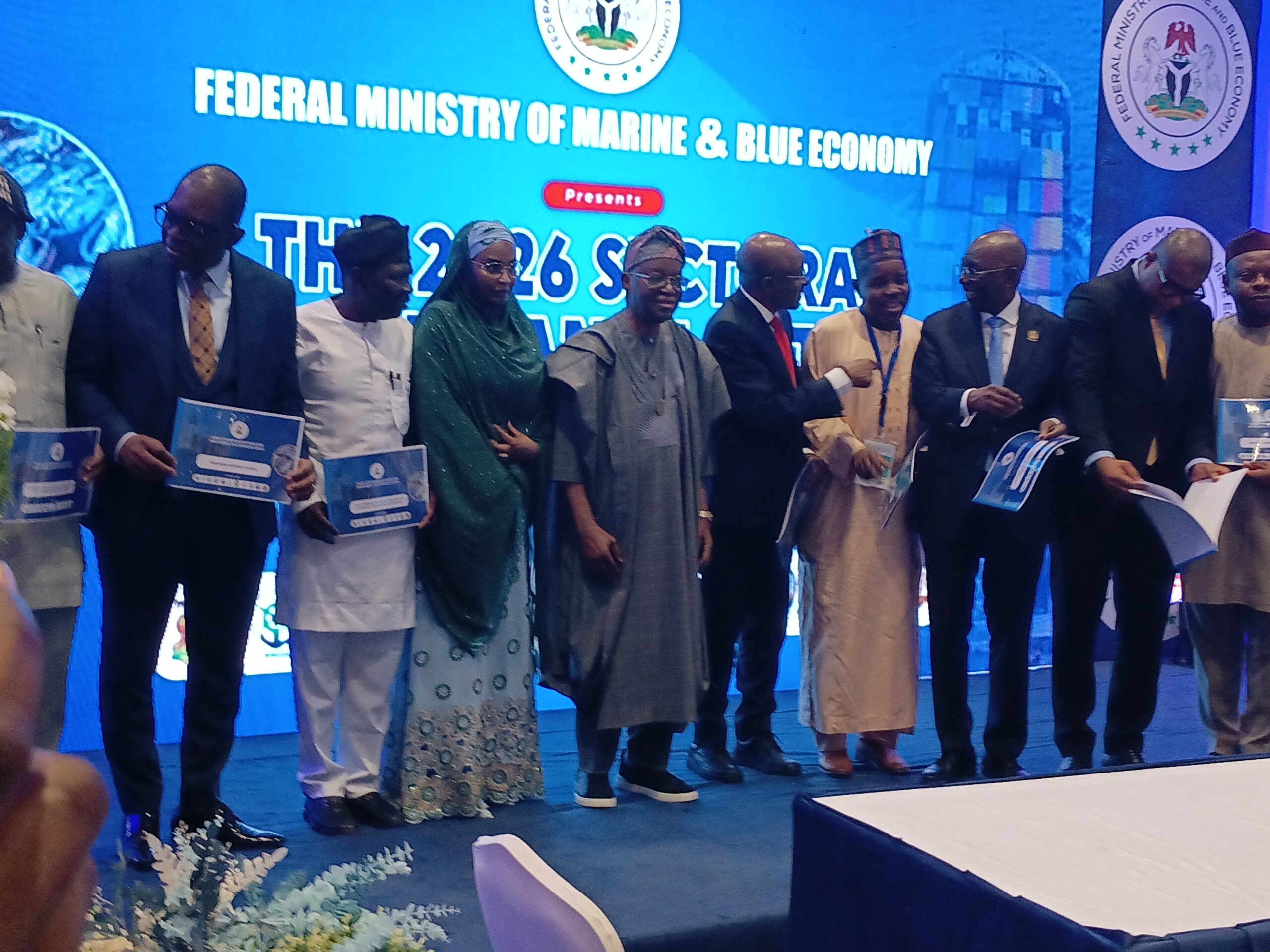
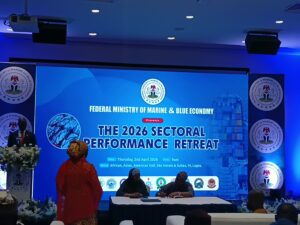
Speaking at the 2026 First Quarter Citizens/Stakeholders’ Engagement, Sectoral Performance Review, and Ministerial Management Retreat held on April 2 in Lagos, the Minister said the improved performance reflects a deliberate policy shift towards strengthening institutional discipline across the sector.
Oyetola explained that the revenue growth was driven by enhanced regulatory oversight, strengthened revenue assurance mechanisms, digitalisation of key operational processes, and intensified efforts to block financial leakages.
He linked the gains to broader reforms within the maritime sector, including ongoing port modernisation initiatives, the approved disbursement of the Cabotage Vessel Financing Fund (CVFF), and sustained efforts to boost indigenous participation in maritime operations.
The Minister issued a stern warning to heads of agencies under the Ministry, stressing the need for strict accountability and measurable performance outcomes. He noted that performance bonds to be signed during the retreat are binding commitments that will be closely monitored and rigorously evaluated.
Oyetola further emphasised the importance of data-driven decision-making, robust monitoring and evaluation systems, and alignment with the Ministry’s strategic objectives. He added that the retreat was designed to strengthen synergy between policy formulation, implementation, and stakeholder expectations.

In a related development, the Minister disclosed significant progress towards the refloating of a national shipping carrier, describing the move as a major milestone in strengthening Nigeria’s maritime capacity.
He revealed that the Federal Government has secured the interest of leading global maritime operators, including AD Ports Group and DP World, to collaborate on the initiative.
According to Oyetola, the proposed national carrier is expected to reduce Nigeria’s dependence on foreign shipping lines, retain maritime revenue within the local economy, and create employment opportunities. He added that the initiative complements other strategic interventions such as the imminent disbursement of the CVFF aimed at empowering indigenous shipowners.
Addressing concerns over regional imbalance, the Minister clarified that the Federal Government’s port modernisation programme is nationwide and not limited to Lagos. He stressed that inclusive infrastructure development remains central to the Ministry’s mandate.
He disclosed that procurement processes are underway for the modernisation of ports in Warri, Port Harcourt, Onne, and Calabar, in addition to approved upgrades for Apapa and Tin Can Island ports.
Oyetola described the modernisation drive as a transformative intervention under the administration of President Bola Ahmed Tinubu, noting that it will improve port efficiency, reduce vessel turnaround time, and enhance cargo handling capacity.
He further revealed that approvals have been granted for the development of new deep seaports in Bayelsa, Cross River, Akwa Ibom, and Ondo States, aligning with the Federal Government’s broader economic diversification agenda.
The Minister said the initiative is expected to stimulate trade, reduce the cost of doing business, and attract investment across key sectors of the economy.
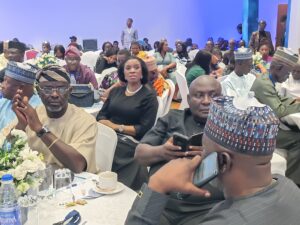
Industry stakeholders at the event, including terminal operators, shipowners, trade associations, and members of the diplomatic corps, commended the Ministry’s performance, describing it as evidence of growing institutional discipline and increasing investor confidence in Nigeria’s marine and blue economy.
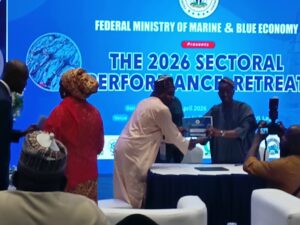
The highlight of the event was the signing of performance bonds between the Minister and heads of agencies under the Ministry, including the Nigerian Ports Authority, Nigerian Maritime Administration and Safety Agency, Nigerian Shippers’ Council, National Inland Waterways Authority, Maritime Academy of Nigeria, and the Council for the Regulation of Freight Forwarding in Nigeria.
“In 2023, our agencies generated ₦700.79 billion. By the end of 2025, this figure had risen to approximately ₦1.83 trillion. This remarkable achievement is the result of deliberate and sustained reforms.
“This gathering reflects our commitment to a governance approach that is inclusive, transparent, and results-driven.
“Let me emphasise that all Departments and Agencies under the Ministry must remain firmly focused on delivering tangible results.These are not ceremonial documents. They are binding commitments. Accountability will not be optional.
“At the institutional level, we must remain disciplined and accountable. Every department and agency must deliver measurable outcomes.The integration of this engagement enables us to listen, reflect, and recalibrate.
“I am pleased to inform you that we have made significant progress toward the refloating of a National Shipping Carrier.We have secured the interest of reputable international partners who are collaborating with us to bring this vision to fruition.By empowering local operators, we are strengthening national capacity and positioning Nigeria for greater participation in global shipping.
“Let me address a concern that has been raised in some quarters that our focus is limited to Lagos ports. This is not the case.We are committed to a balanced and inclusive development of port infrastructure across the country.
“These projects will expand Nigeria’s maritime capacity, decongest existing ports, open up new economic corridors, and position our country as a leading maritime gateway in Africa,” he said.
Greg Ogbeifun, Managing Director/CEO of Starzs Marine and Engineering Ltd. called for Nigeria’s urgent return to international shipping, warning that continued reliance on foreign vessels is costing the country billions of dollars annually.
Ogbeifun said despite being Africa’s largest trading nation with the continent’s biggest population, Nigeria remains underrepresented in international shipping operations.
He stressed that Nigeria’s import volume and export potential justify the need for indigenous participation in global shipping.
According to him, the country loses between $8 billion and $9 billion annually to foreign shipping companies that dominate the transportation of Nigerian cargo.
He noted that although Nigeria has functional ports and handles significant cargo volumes, the absence of Nigerian-owned vessels in international trade remains a major structural gap in the maritime sector.
He identified regulatory bottlenecks, particularly stringent national carrier requirements, as a major obstacle to indigenous participation in international shipping.
According to him, one of the key challenges is the requirement for shipowners to provide full vessel details before being granted national carrier status, despite not having guaranteed cargo to justify vessel acquisition.
He suggested that government cargoes should be identified and reserved for Nigerian operators to provide certainty that would enable investors acquire suitable vessels.
Ogbeifun also called for the strategic use of maritime funds to provide guarantees for ship acquisition rather than direct funding, noting that financial backing from government would improve access to international financing for indigenous operators.
He further identified high port charges and fiscal policies as significant challenges affecting the competitiveness of Nigerian shipping companies.
The maritime stakeholder urged the Federal Government to introduce incentives such as zero import duty on vessels registered in Nigeria, arguing that current tax regimes place local operators at a disadvantage compared to foreign competitors.
The Manager of the Central Results Delivery Coordination Unit (CRDCU), Ismail Okunola, emphasised the need for stronger collaboration among government agencies to unlock the full potential of Nigeria’s marine and blue economy.
He said effective inter-agency cooperation is critical to achieving Nigeria’s economic diversification goals and strengthening the country’s non-oil revenue base.
He described the marine and blue economy as a vital component of Nigeria’s diversification strategy, noting that the sector provides opportunities for economic growth, ecological conservation, and social development.
According to him, the sector encompasses a wide range of activities, including fisheries, aquaculture, maritime trade and transportation, marine tourism and offshore energy.
He said overlapping mandates among agencies frequently result in duplication of functions, delays in cargo clearance processes, and increased operational costs for stakeholders.He further identified poor information sharing, institutional rivalry, and the absence of unified command structures as key barriers to effective collaboration.
Okunola stressed that improved inter-agency cooperation would significantly enhance maritime security, operational efficiency, and revenue generation within the sector.
He explained that joint operations, shared intelligence, and coordinated responses among agencies would strengthen national security and improve regulatory compliance across maritime operations.






One Comment